Basement Waterproofing Dubai: Causes, Methods and Costs
A practical owner's guide to underground parking seepage, villa basement dampness and retaining-wall leaks — what causes them in UAE soil conditions, which systems work from the inside, and what drives the quote.
Basement leaks are not the same problem as a roof leak
Roof waterproofing gets most of the attention in Dubai because summer heat and winter rain are visible. Basement waterproofing is quieter — and often more structural. Water that enters underground parking, plant rooms or villa basements usually arrives under pressure from the soil, not as a drip from a failed coating. That changes diagnosis, materials and cost.
DryGuard.ae has waterproofed roofs, wet areas and below-grade structures across the UAE since 2011. This article is written for property owners, facility managers and villa residents who need to understand why a basement stays damp, which repair approach fits occupied buildings, and how to compare quotes without guessing. For service scope and booking, see our basement waterproofing Dubai page. For short Q&A answers, use the basement waterproofing FAQ.
If your only symptom is a ceiling stain on an upper floor, start with our water leak in ceiling guide instead — that path is usually roof, bathroom or pipe related, not groundwater.
Direct answer
What is basement waterproofing?
Basement waterproofing is the set of membranes, coatings, injections and drainage details used to stop groundwater, seepage and capillary moisture from entering below-grade spaces such as underground parking, villa basements, plant rooms and retaining walls.
In Dubai and the wider UAE, it must resist hydrostatic pressure, saline groundwater and thermal movement at construction joints. It is not the same as roof waterproofing: UV resistance matters less, pressure resistance and joint detailing matter more.
Successful basement work usually combines leak tracing, crack or joint injection where water is active, then a continuous internal tanking or crystalline layer. Drainage and sump maintenance often complete the system.
Root causes
Why do basements leak in Dubai and the UAE?
Rainfall is not the main driver. Coastal and creek-side districts have a high water table. In Business Bay, Dubai Marina, JLT and parts of Dubai Creek Harbour, basement walls sit in permanently wet soil. That creates hydrostatic pressure — water pushing continuously against concrete. Any crack, joint or poorly sealed pipe sleeve becomes a pathway.
Construction joints between concrete pours are the most common failure line. Waterstops can shift during casting, or later movement opens a path. Pipe penetrations for drainage, fire services and electrical conduits create annular gaps that harden and crack. Capillary action also draws moisture into porous concrete, leaving damp patches even when no free water is visible.
Salts in UAE groundwater make the problem worse. Water carries minerals through the concrete; as moisture evaporates indoors, white powder (efflorescence) appears. That powder is evidence of active water movement, not a cosmetic stain. Left untreated, salts accelerate reinforcement corrosion and concrete spalling.
Villa basements add another pattern: missing or failed external tanking, blocked perimeter drains, and landscaping that directs irrigation toward retaining walls. A green lawn against a basement wall can keep soil saturated year-round even when the sky is clear.
Early warning signs
How do you know a basement needs waterproofing?
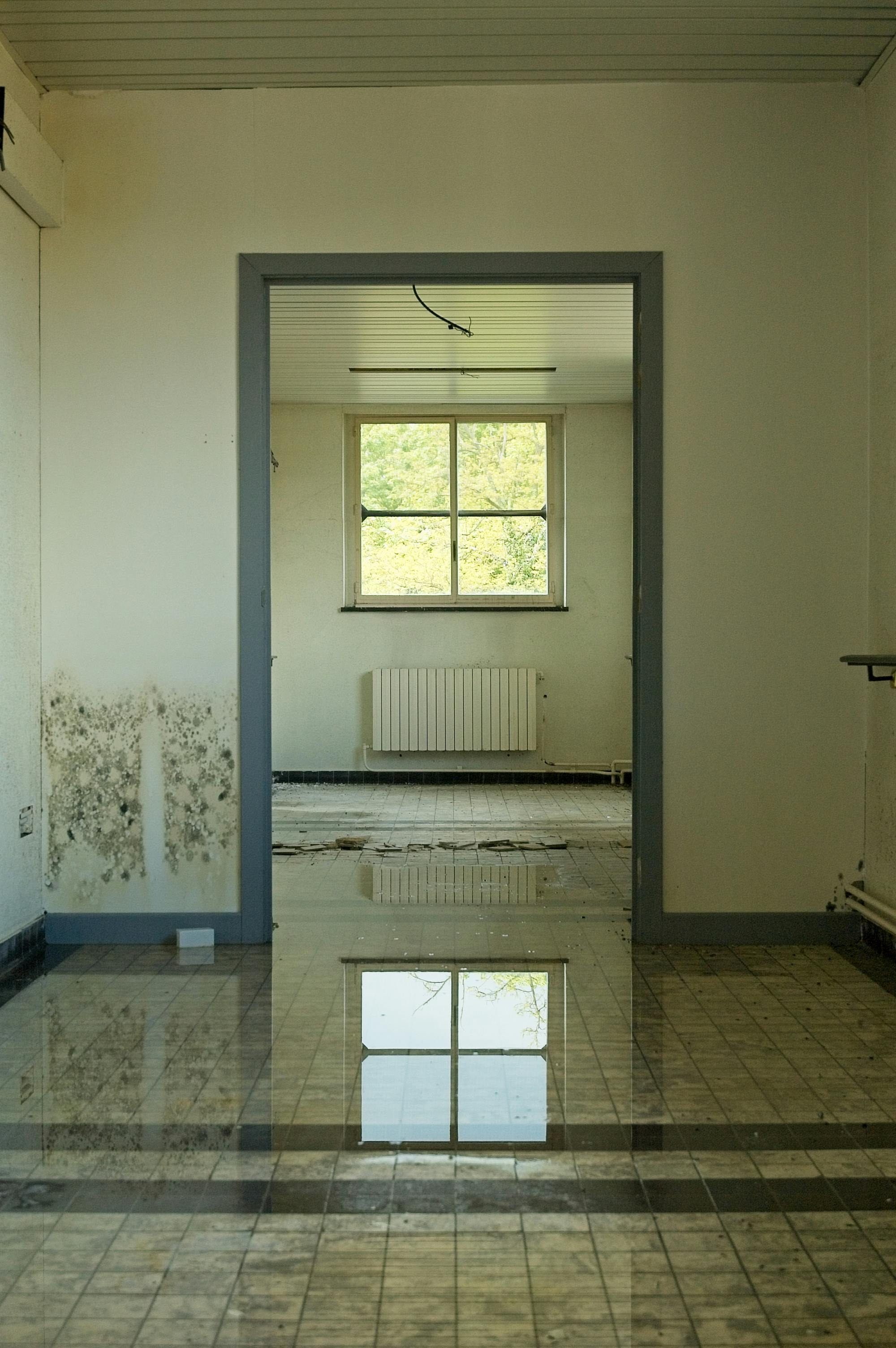
Look for musty smell that returns after cleaning, dark patches that never fully dry, white crystalline deposits on walls or columns, peeling paint on lower walls, rust stains on exposed steel, and water tracks at wall–floor junctions after rain or irrigation. In parking levels, watch for wet tyre tracks that do not match washing, and damp around expansion joints.
Thermal cameras and moisture meters help separate surface condensation from through-wall seepage. Condensation can appear on cold pipes in humid months; seepage usually shows a path from joints, cracks or penetrations. Guessing wrong leads to repainting that fails within weeks.
Act early. Active water behind finishes can corrode reinforcement long before a puddle forms. Structural repair after spalling costs far more than sealing the entry path while concrete is still sound.
Positive vs negative side
What is positive-side vs negative-side basement waterproofing?
Positive-side waterproofing is applied on the wet face of the structure — typically the exterior wall against soil. Bitumen membranes, drainage boards and perimeter drains keep water away from the concrete. It is the preferred approach for new construction because access exists before backfill.
Negative-side waterproofing is applied on the dry interior face. Cementitious tanking, crystalline coatings and injection systems resist water that has already reached the wall. This is the practical route for most existing Dubai buildings because excavating beside occupied towers or villas is disruptive and expensive.
Neither side is “better” in absolute terms. Positive-side reduces pressure and salt load on the structure. Negative-side stops water from entering usable space when the outside is inaccessible. Many projects combine both: injection to stop active flow, internal tanking for a continuous barrier, and improved drainage where access allows.
Which basement waterproofing methods are used in Dubai?
Injection waterproofing seals active leaks through cracks, construction joints and pipe sleeves. Hydrophilic polyurethane resins react with water and expand to fill the path. Epoxy is reserved for dry, non-moving cracks where structural bonding is the goal. Injection is often step one: stop the flow before coating.
Cementitious tanking is a multi-coat slurry or mortar applied to prepared interior concrete. It bonds to the substrate and resists positive and, with suitable products, negative pressure. It suits parking walls, plant rooms and villa basements where a continuous rigid barrier is needed.
Crystalline waterproofing grows crystals inside concrete pores. It is useful for sound slabs and walls with seepage or vapour drive, and for tanks and lift pits sharing the same concrete environment. It is not a substitute for injection when water is flowing freely through an open joint.
External membranes and drainage boards remain the gold standard on new builds and major renovations where walls can be exposed. A bitumen or modified membrane plus drainage board and sump design manages water before it reaches the concrete. See also our crystalline waterproofing UAE guide for when crystal systems beat sheet membranes below grade.
Lift pits often share the same failure modes as basements — joints, hydrostatic pressure and saline water. If your leak is concentrated at the elevator shaft, review lift pit waterproofing Dubai as a related scope.
Step-by-step
How should a basement waterproofing project run?
1. Inspect and map moisture
Document wet zones, joints, penetrations and drainage. Identify whether water is hydrostatic, capillary, irrigation-driven or a broken pipe. Photos and moisture readings should appear in the quotation scope.
2. Stop active leaks
Inject flowing cracks and joints. Reseal pipe sleeves with flexible hydrophilic details. Painting over an active drip wastes coating money.
3. Prepare the substrate
Remove loose laitance, failed coatings and heavy efflorescence. Repair honeycombing. Open and clean joints that will receive sealant or bandage details.
4. Apply the continuous barrier
Install cementitious tanking, crystalline slurry or a specified hybrid system at the correct thickness. Reinforce corners and wall–floor junctions with fillets where required.
5. Address drainage
Clear or install perimeter channels and confirm sump pumps work. Waterproofing without pressure relief fails faster in high water-table sites.
6. Verify and maintain
Monitor treated areas, document materials and warranty terms, then schedule annual checks. Keep drains clear and report new penetrations immediately.
Cost planning
How much does basement waterproofing cost in Dubai in 2026?
Use ranges only for planning — firm prices need inspection. Internal injection plus tanking for localised leak zones often sits lower than full-perimeter treatment. Broad guidance seen on UAE projects: crystalline or cementitious treatment commonly plans around AED 70–120 per m²; complex injection-heavy basements can reach AED 100–150+ per m² of treated area; external excavation and membrane work is a different budget category entirely.
Cost drivers include access (tower parking shutdowns, night work), number of construction joints, active water volume, concrete condition, salt contamination, and whether plant rooms require specialised coatings. A cheap per-metre quote that skips injection on active joints usually becomes a repeat visit.
Compare quotes by scope, not headline rate. Ask what preparation is included, which resin or slurry brand will be used, how wall–floor junctions are detailed, and what warranty conditions require. Our waterproofing cost per sq ft UAE article covers broader planning figures; basement work sits toward the higher end when pressure and joints dominate.
Common mistakes
What mistakes cause basement waterproofing to fail again?
Painting damp walls with “waterproof paint” without stopping the water path. Decorative coatings trap moisture and peel. Treating efflorescence as dirt instead of a symptom. Quoting by floor area alone without mapping joints. Using rigid epoxy in moving joints. Skipping primer or surface preparation. Ignoring sump pumps and blocked drains so pressure rebuilds behind a new coating.
Another frequent error is waterproofing only the visible wet patch. Water travels laterally inside concrete and along construction joints. A complete joint circuit or mapped moisture path must be treated, or the leak relocates a few metres away.
Finally, mixing incompatible systems — for example applying a non-breathable coating over a damp crystalline layer without manufacturer guidance — creates blistering. Stick to a designed system sequence from one method statement.
Property types
Underground parking, villa basements and coastal sites
Tower parking levels need durable finishes that tolerate vehicle traffic, tyre scrub and cleaning water. Joints around ramps and expansion strips deserve special detailing. Night or weekend programmes reduce tenant disruption.
Villa basements in Jumeirah, Emirates Hills and Arabian Ranches often combine rising damp, irrigation saturation and incomplete original tanking. Internal tanking plus exterior drainage improvements where landscaping allows usually outperform cosmetic plaster repairs.
Coastal and reclaimed land sites — including parts of Abu Dhabi’s Yas Island and Dubai Marina — face higher chloride loads. Materials and concrete repair must account for salt attack, not only water volume. City-specific service context is available on our Dubai waterproofing and Abu Dhabi waterproofing pages.
When to call
When should you book a basement inspection?
Book an inspection if damp returns after painting, if white salts reappear within weeks, if water tracks form at joints after rain, if a musty smell persists in parking or storage, or if you plan a basement fit-out and want a dry substrate before finishes. Do not wait for standing water.
DryGuard.ae inspects before quoting. We map leak paths, recommend injection and tanking where needed, and issue a written warranty for completed scope. Call or WhatsApp +971 52 246 2601, or use the contact page. For contractor selection criteria that apply across waterproofing trades, see how to choose a waterproofing company in Dubai.
FAQ
Basement waterproofing questions owners ask first
What causes basement leaks in Dubai if it rarely rains?
Most Dubai basement leaks come from groundwater hydrostatic pressure, failed construction joints, pipe penetrations and capillary moisture — not from rainfall alone. Areas such as Business Bay, Dubai Marina and Dubai Creek Harbour sit where the water table presses constantly against basement walls and slabs.
Can you waterproof a basement from the inside?
Yes. Negative-side (internal) waterproofing is the standard approach for occupied buildings where excavation is impractical. Active leaks are sealed with injection, then cementitious tanking or crystalline treatment creates a continuous internal barrier against water pressure.
What is the difference between positive-side and negative-side waterproofing?
Positive-side waterproofing is applied on the face of the wall that meets the soil or water source (usually outside). Negative-side waterproofing is applied on the dry interior face. For existing Dubai towers and villas, negative-side systems are usually the practical choice.
How much does basement waterproofing cost in Dubai?
As a 2026 planning guide, internal basement waterproofing often falls around AED 70–150 per m² depending on leak severity, joint count, access and whether injection is required. External excavation and membrane work costs more and is mainly used on new builds or major renovations.
Is crystalline waterproofing enough for a leaking basement?
Crystalline systems work well on sound concrete for vapour and seepage control, but active flowing leaks usually need polyurethane injection first. Many basements use injection plus crystalline or cementitious tanking as a combined system.
More owner questions — warranty, sump pumps, rising damp, parking shutdowns and materials — are answered in our basement waterproofing FAQ for Dubai.
Related reading
Build a full waterproofing picture for your property