Flat concrete roof leaks, metal roof seepage and ponding water solved with systems built for 50°C heat and intense UV. We inspect, diagnose and waterproof villa roofs, tower slabs and warehouse structures across Dubai and the UAE.
Dubai's flat roof tradition means almost every building — from a villa in Arabian Ranches to a tower in Business Bay — relies on a horizontal surface to keep water out. When that surface fails, there is nowhere for the water to go except down. We have inspected hundreds of leaking roofs across Dubai, and the root causes are almost always the same: inadequate original waterproofing, failed drainage design, thermal cracking and damage from foot traffic or HVAC maintenance.
The most common roof type we treat is the flat concrete slab, found on villas, low-rise commercial buildings and podium decks across Dubai. These roofs were often waterproofed with a thin layer of bitumen or a basic cementitious coating that cracked within a few summers. Water ponds after the brief but intense rain showers Dubai experiences, and once it finds a crack, it travels through the concrete and appears as a stain on the ceiling below. The visible leak is rarely directly below the roof entry point — water can travel several meters inside the slab before dropping.
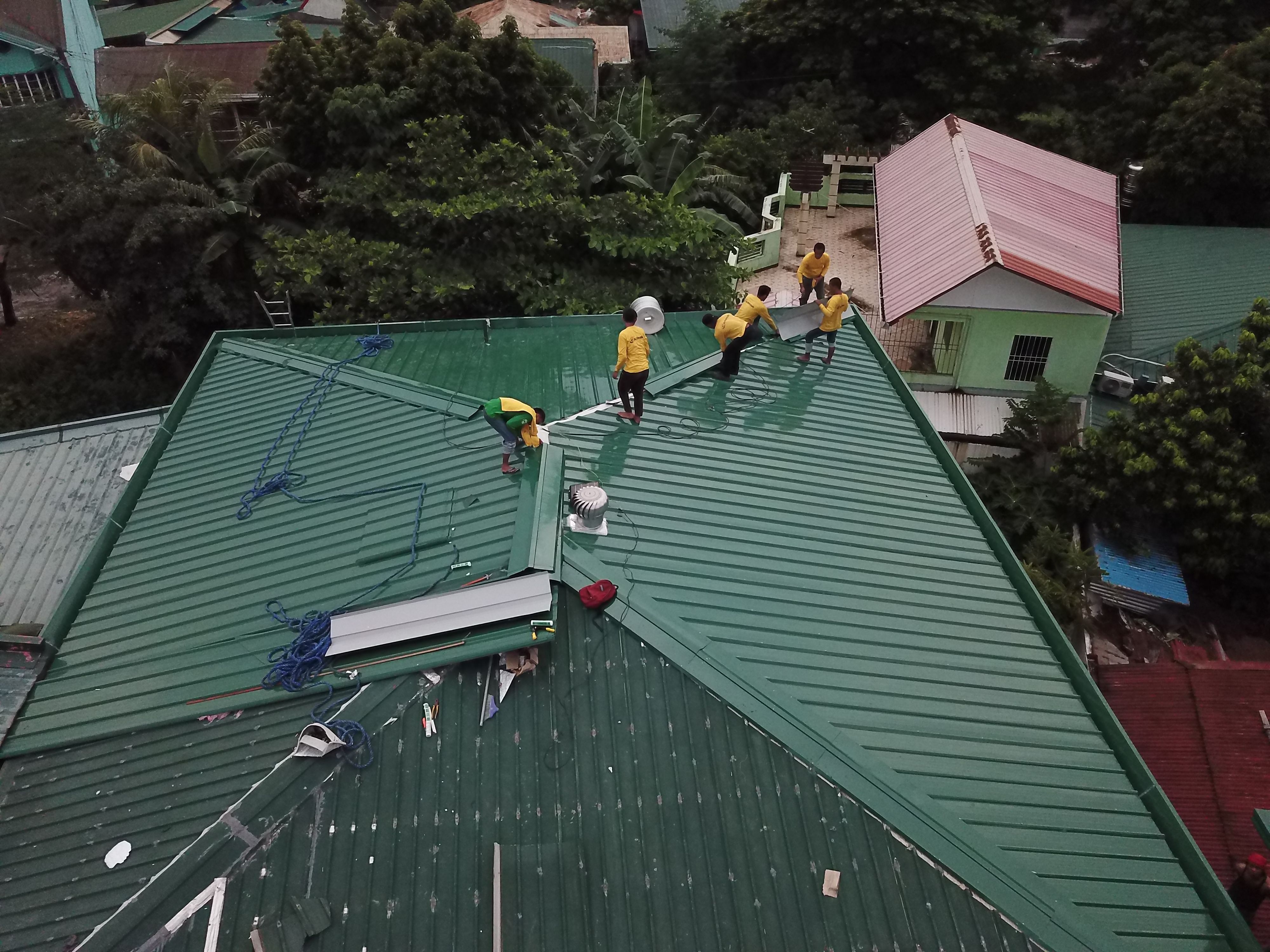
Metal roofs present a different set of problems. Dubai's industrial areas in Al Quoz, Jebel Ali and Dubai Investment Park contain thousands of warehouses with corrugated metal sheet roofs. These roofs face 50°C surface temperatures in summer, causing the metal to expand and contract daily. Screw lines loosen, seams separate and skylight seals degrade. We have treated warehouses where hundreds of screws had backed out, creating a grid of leak points across the entire roof. Our approach is to systematically replace fasteners, seal seams and apply a protective coating that handles thermal movement.
UV radiation is the silent killer of roof waterproofing in the UAE. A coating that looks perfect in March can be chalking and cracked by September if it lacks UV stabilisers. We have seen expensive polyurethane systems fail prematurely because they were installed without the correct primer or protective topcoat for Dubai's sun intensity. Our material selection process considers not just the waterproofing performance but also the thermal expansion coefficient, UV resistance and traffic durability required for each specific roof.
Proper drainage is as important as the waterproofing layer itself. We regularly inspect roofs with perfectly good membranes that are failing because water ponds in low spots. In Dubai's heat, standing water accelerates membrane degradation and creates algae growth that blocks drains. Our roof inspections include a full drainage assessment — we check slope, drain capacity, parapet overflow outlets and the condition of downpipes. Sometimes fixing the drainage is half the solution.
Common failures
Roof Waterproofing Problems We Solve in Dubai
Flat Concrete Roof Cracks & Ponding
Dubai's intense sun causes concrete roof slabs to expand and contract, creating hairline cracks that let water through. Without proper slope, water ponds in low areas and accelerates membrane failure. We repair cracks with epoxy injection, install additional drains where needed and apply bitumen membrane or PU coating systems.
Parapet Wall Junction Leaks
The junction where the roof meets the parapet wall is the most common leak point on Dubai flat roofs. The original waterproofing detail often cracks under thermal movement, allowing water to enter behind the membrane. We strip and rebuild these junctions with reinforced bitumen details or flexible PU fillets.
Metal Roof Screw Line & Seam Leaks
Warehouse and factory metal roofs in Al Quoz and Jebel Ali lose fasteners under thermal cycling. We replace corroded screws with oversized stainless fasteners, apply butyl tape along seams and coat the entire roof with a UV-stable elastomeric system.
HVAC Penetration & Plant Room Leaks
Commercial towers in Business Bay and Downtown Dubai have multiple pipe and duct penetrations through the roof slab. Each penetration is a potential leak path if not properly flashed. We remove old flashings, treat the surrounding concrete and install new membrane collars.
Tiled Roof Underlay Failure
Villas with clay or concrete tile roofs often have failed waterproofing underlay beneath the tiles. Water runs under the tiles and rots the timber structure below. We lift tiles, replace the underlay and re-lay with proper ventilation gaps.
Shared Roof Slab Multi-Unit Leaks
Apartment buildings across Dubai share a single roof slab. One waterproofing defect can leak into multiple units. We inspect the entire shared roof area, trace leak paths and provide building-wide solutions with minimal tenant disruption.
Our process
How DryGuard.ae Waterproofs Your Roof
1. Roof Inspection & Moisture Mapping
We start with a full roof walkover, checking surface condition, drainage, cracks and penetrations. Inside, we use moisture meters and thermal imaging to map the water path and identify how far the leak has travelled from the roof entry point.
2. Substrate Preparation
Old coatings, loose screed and debris are removed. Cracks are opened, cleaned and injected with epoxy or polyurethane. The surface is primed to ensure the new waterproofing layer bonds properly to the concrete or metal substrate.
3. Waterproofing System Application
We apply the selected system — torch-on bitumen membrane, self-adhesive membrane, polyurethane liquid coating or cementitious tanking — at the correct thickness and with reinforced detail at joints, drains and penetrations.
4. Drainage Correction & Protection
We verify roof slope and drain function. Where ponding occurs, we regrade or install additional outlets. For trafficked roofs, we add protective screed, pavers or walkway pads to prevent mechanical damage to the waterproofing layer.
5. Quality Check & Documentation
Every roof project ends with a flood test or hose test to confirm watertightness. We photograph the completed work and provide a warranty certificate with maintenance recommendations. Annual inspections are recommended for exposed roof systems.
Coverage
Roof Waterproofing Across the UAE
While this page focuses on roof waterproofing Dubai, DryGuard.ae provides the same specialist service across all emirates. In Abu Dhabi, we handle coastal salt-exposed roofs on Saadiyat Island and government buildings near the Corniche. Sharjah's Industrial Area warehouses benefit from our metal roof expertise, while Ajman villas rely on us for flat concrete roof renewal.
We also serve Ras Al Khaimah hotels and Fujairah port facilities, Al Ain agricultural buildings and Umm Al Quwain port warehouses. Every emirate receives the same inspection-led approach and material selection process calibrated for local climate conditions.
Get started
Fix Your Roof Leak Before the Next Rain
Dubai's brief but intense rain events turn small roof weaknesses into major interior damage. A proactive inspection costs far less than repairing water-damaged ceilings, electrical systems and furnishings. Our team carries out same-day roof inspections across Dubai with thermal imaging and moisture detection equipment.
Call +971 52 246 2601 now or request a quote through our homepage. We provide clear, itemised quotations with no hidden costs, and we can schedule work around your occupancy or business hours.
Roof Waterproofing Cost, Warranty and Maintenance in the UAE
What drives the cost of a roof waterproofing job
Roof waterproofing cost depends on the roof area, the chosen system, the number of coats or layers, the condition of the existing surface, the number of drains and penetrations, and how much protection is needed. A protected bitumen membrane on a villa roof is usually more economical than a full exposed PU system with a trafficable top coat. See our 2026 roof waterproofing cost guide for current AED/m² ranges and villa totals.
Typical service life and when to recoat
A protected bitumen membrane can last 10 to 15 years in the UAE. A polyurethane system typically lasts 7 to 10 years before it needs an aliphatic top-up coat. Acrylic coatings on exposed roofs may need attention every 5 to 7 years. The key difference is whether the system is exposed to UV and whether the drainage is effective.
What our warranty covers
Our workmanship warranty covers leaks that result from the application and detailing performed by our crew. It does not cover new damage from third-party work, blocked drains, or structural movement that occurs after completion. We make the warranty terms clear in writing before work starts.
Maintenance that protects the investment
Drains should be cleared after sandstorms and before the rainy season. Any new roof penetrations from AC, solar or antenna work must be sealed promptly. Annual visual inspections of flashings, top coat and drains can extend a roof's life by several years.
Building types
Roof Waterproofing Solutions for Villas, Warehouses and Towers in Dubai
Villa roofs in Dubai are typically flat concrete slabs with parapet walls, planters, and outdoor equipment. They need waterproofing that can handle thermal movement and occasional foot traffic. We use polyurethane liquid membranes or torch-on bitumen systems depending on the roof use and finish. For villas with roof terraces, we add protective screeds or pavers to prevent mechanical damage.
Warehouse roofs are often metal sheet roofs that expand and contract daily. The primary failure points are fasteners, seams, and skylights. Our approach for warehouses includes fastener replacement, seam sealing, and either a reflective coating or PU foam spray. The right choice depends on whether the building is air-conditioned and whether the stored stock is sensitive to heat.
Tower and commercial buildings have flat concrete roofs with multiple penetrations for HVAC, antennas, and ducts. These roofs require systems that can handle foot traffic from maintenance crews and exposure to UV. We use reinforced bitumen membranes or high-build PU systems with walkway pads. Drainage design is critical because a single blocked drain on a large roof can cause extensive ponding.
Each building type needs a different inspection and maintenance approach. Villa roofs should be checked after any work by other trades, warehouse roofs should have annual fastener checks, and tower roofs need quarterly drain inspections and protective top coat renewal. DryGuard.ae matches the waterproofing system and maintenance plan to the building type and use.
Warranty
Roof Waterproofing Warranty, Maintenance and Long-Term Value
A roof waterproofing project is only as good as the warranty and maintenance that follow it. At DryGuard.ae, we provide a written warranty that clearly states what is covered, what is excluded, and how to make a claim. The warranty is only meaningful if the contractor is still in business, which is why we maintain a permanent office in Dubai.
Maintenance starts with regular inspections. We recommend a roof walkover before the winter rain season and after the summer heat. The inspection should check drains, flashings, top coat condition, and any new penetrations. A small repair at the right time can prevent a major leak later.
The long-term value of a roof system is measured by the cost per year of service. A cheap system that fails in five years is more expensive than a properly installed system that lasts fifteen. When comparing quotes, divide the total cost by the expected service life and add the cost of potential interior damage.
Documentation is important for property management. We provide a completion report with photographs, the materials used, the thickness applied, and the warranty terms. This record helps with insurance claims, property sales, and future maintenance planning.