Waterproofing blog
Why Roof Waterproofing Fails in the UAE
The common reasons roof waterproofing fails in UAE weather and how to prevent repeat leaks.
Waterproofing blog
The common reasons roof waterproofing fails in UAE weather and how to prevent repeat leaks.
Understanding failure
The UAE presents one of the world's most aggressive environments for roof waterproofing. Summer temperatures regularly exceed 45C with relative humidity above 80% during coastal mornings. UV radiation levels are among the highest globally because of minimal cloud cover and low atmospheric dust during summer months. These conditions do not merely test waterproofing materials: they actively destroy them if the wrong system was chosen or if any step in the installation process was compromised.
The first and most destructive factor is thermal shock. A roof surface in Dubai can reach 75-80C at midday in July, then drop to 30C within two hours when a rare summer rainstorm passes. This 45-degree temperature swing causes rapid expansion and contraction. If the waterproofing material lacks sufficient elasticity, it cracks at the weakest points: corners, joints, penetrations, and edges. We have inspected villa roofs in Jumeirah where a PU coating cracked completely through at every parapet corner after just two summers because the product was formulated for European temperature ranges.
UV degradation is the second killer. The UAE receives approximately 3,500 hours of sunshine annually. Standard bitumen membranes without UV-stable mineral granules or aluminium facing become brittle and crack within 3-4 years. Acrylic coatings without proper UV stabilisers chalk and lose adhesion. Even some supposedly UV-resistant products imported from cooler climates fail because their UV package was designed for markets with 50% less annual sunshine exposure. The Dubai Municipality building code does not mandate UV-specific testing for waterproofing products, so inferior imports reach the market regularly.
Critical mistakes
Mistake one: applying coating to a damp surface. In Dubai's humid coastal climate, concrete roof slabs retain moisture deep within the matrix for weeks after rain. Moisture meters should read below 4% before any solvent-based coating is applied. We have seen contractors apply PU coating 48 hours after a storm because the surface felt dry to the touch. Within three months, blisters formed across 40% of the roof as trapped moisture vapour pressure pushed the coating away from the concrete.
Mistake two: ignoring the slope. Water must drain from a roof. A flat roof in Dubai is actually a roof that holds water. When waterproofing is applied over a poorly sloped screed, ponding water creates hydrostatic pressure that finds every pinhole, seam gap, and edge weakness. The waterproofing does not fail because it is a bad product; it fails because it was asked to hold back standing water indefinitely. Proper drainage design with minimum 1:80 falls is essential before any membrane goes down.
Mistake three: wrong material for the roof type. Metal roofs move. Concrete roofs do not move much but they crack. Tile roofs need under-tile membranes. Each substrate demands a different approach. A bitumen membrane torched onto a metal roof is a recipe for disaster because the metal expands 60mm across a 50-metre span while the bitumen cannot stretch that far. The membrane tears at fasteners. Conversely, a flexible PU coating on a concrete roof with no movement joints is unnecessary over-engineering that costs more without adding benefit.
Mistake four: inadequate detailing at penetrations. Every pipe, duct, vent, satellite dish mount, and HVAC curb is a potential leak path. The main roof surface may be perfectly sealed, but if the 150mm zone around each penetration was treated with the same generic detail, water will enter. Proper detailing requires reinforced collars, flexible sealants that accommodate differential movement, and counter-flashing where the penetration passes through a curb or wall.
Mistake five: skipping the primer. Primers are not a money-making add-on. They chemically bond the membrane to the substrate and block substrate moisture from interfering with curing. A contractor who says primer is optional either does not understand the chemistry or is cutting corners to win on price. In Dubai's climate, the cost of primer is less than 5% of the total project but its absence can reduce service life by 50%.
Mistake six: applying in wrong weather conditions. Coatings have temperature and humidity windows. In Dubai, this means avoiding application when ambient temperature exceeds 38C or when relative humidity is above 85%. High temperatures cause solvent flash-off too quickly, trapping bubbles. High humidity causes moisture curing products to skin over before full cure. Professional contractors in Dubai work early mornings and adjust product selection by season.
Mistake seven: no maintenance plan. Waterproofing is not install-and-forget. Annual inspections, gutter cleaning, and touch-ups at high-stress areas extend system life by 30-50%. A bitumen membrane that would last 10 years with maintenance fails in 6 years without it. The cost of annual maintenance is approximately 3-5% of the original installation cost. It is the best-value investment in the entire waterproofing lifecycle.
UAE case studies
A residential tower in Business Bay was waterproofed in 2022 with a high-quality single-ply membrane imported from Europe. By 2024, leaks were appearing at multiple units on the top three floors. Investigation revealed that the membrane itself was intact, but the adhesive used to bond it to the concrete slab was not rated for the 70C surface temperatures reached on dark membrane in Dubai summer. The adhesive softened, the membrane lifted, and wind pressure drove rainwater under the edges. The solution was to remove the failed adhesive system and re-attach with a mechanically fastened system rated for 85C. The rectification cost AED 180,000.
A villa in Emirates Hills had its roof waterproofed with a polyurethane coating by a general maintenance contractor who offered a very competitive price. The work was completed in two days during August when surface temperatures exceeded 60C. Within four months, the coating was peeling in sheets. The contractor had used a water-based acrylic product mislabelled as polyurethane, applied it over damp concrete without primer, and worked in conditions far outside the manufacturer's specified range. The entire coating had to be removed and re-applied correctly at a cost of AED 22,000.
An industrial warehouse in Al Quoz had a torch-on bitumen membrane installed over a metal roof. This is fundamentally wrong: bitumen membranes are designed for concrete or timber substrates, not metal. Within 18 months, the membrane had torn at every fastener location due to differential thermal movement. The metal roof expanded 60mm across its span in summer heat while the rigid bitumen could not stretch. The tears allowed water to enter at hundreds of points. The correct repair involved removing the bitumen, replacing corroded fasteners, and applying a flexible acrylic coating system designed for metal substrates.
Prevention guide
Prevention starts at the design stage. If you are building new, specify the waterproofing system in the structural drawings and allocate budget for proper falls, drainage outlets, and expansion joints. Do not treat waterproofing as an afterthought to be resolved once the roof structure is complete. The best waterproofing in the world cannot overcome a fundamentally flawed roof design with no drainage or movement accommodation.
For existing buildings, invest in a proper inspection before any work begins. A 60-minute professional inspection costs AED 500-1,500 and will identify issues that could cost tens of thousands to fix later. The inspection should include moisture mapping, thermal imaging, fastener condition assessment on metal roofs, and drainage evaluation. Ask for a written report with photographs and a repair scope. Any contractor who quotes without inspecting is guessing, and guesses are expensive.
Material selection is critical. In the UAE, choose products specifically tested and warranted for Gulf conditions. Look for UV stabiliser content, thermal cycling test data, and Dubai Municipality approval where applicable. Ask the contractor for material datasheets and verify that the product is suitable for your roof type, exposure, and traffic load. Do not accept generic assurances.
Finally, establish a maintenance relationship. Annual inspection, gutter cleaning, and minor touch-ups cost very little compared to full replacement. Schedule inspections in October before the winter rain season and in April after the harshest summer period. Document every inspection, photograph any changes, and address issues immediately. A small crack or blister repaired in year three costs a few hundred dirhams. The same crack left untreated becomes a full roof failure in year six costing tens of thousands.
Related services
If you are concerned about waterproofing failure on your property, contact us for a professional inspection. We identify the root cause before recommending repair, and our solutions are designed specifically for UAE climate conditions.
Maintenance failures
Many waterproofing failures are not caused by the original installation but by a lack of maintenance afterwards. The UAE climate is harsh. UV, heat, sand, and rain all take a toll on roof coatings and membranes. Without regular inspection and small repairs, minor damage becomes a major failure. The first sign is often a small crack or blister. Left untreated, it grows into a split that allows water to enter.
Blocked drains are the most common maintenance failure. A single blocked drain can create a pond that holds water for days or weeks. Even the best waterproofing membrane is not designed for permanent submersion. The water slowly degrades the material and finds any weakness. Quarterly gutter and drain cleaning is the single most effective maintenance task for any roof in Dubai.
Another common issue is damage from other trades. AC technicians, satellite installers, and solar panel teams often walk on roofs without protecting the waterproofing layer. They drop tools, drag cables, and create punctures. Each puncture is a future leak. We recommend that any work on the roof is done with protective boards and that the waterproofing contractor inspects the roof afterwards.
Fixing failures
If you notice a leak, the first step is to contain the damage. Move furniture and equipment away from the leak path and collect water in containers. Do not try to patch the leak from inside with sealant; this will only hide the problem. The real repair must be done on the roof surface where the water enters.
The second step is to call a professional for an inspection. The contractor will locate the entry point, assess the condition of the existing waterproofing, and determine the cause of failure. The repair may be a local patch, a section replacement, or a full roof re-waterproofing. A good contractor will explain why the system failed and how to prevent it happening again.
The third step is to fix the root cause, not just the symptom. If the waterproofing failed because of blocked drains, the drains must be repaired. If it failed because of poor detailing, the detailing must be redone. If the wrong material was used, it must be replaced. At DryGuard.ae, we always look for the root cause before we quote. This saves our clients from repeat repairs and gives them a permanent solution.
Cost of failure
When a roof waterproofing system fails, the cost is not limited to the repair bill. In the UAE, where air conditioning runs for most of the year, water entering insulation reduces its thermal performance. This forces the HVAC system to work harder, increasing electricity bills by 10-20% in the affected zone. In a large villa or commercial building, this energy penalty continues until the insulation is completely replaced, which is a separate cost from the waterproofing repair.
Internal damage is often the biggest expense. Water that enters through a roof can travel along beams, conduits, and false ceilings before becoming visible. By the time a stain appears on the ceiling below, the surrounding plaster, paint, and in some cases electrical wiring may already be compromised. In apartment buildings and offices, leaks can damage tenant property and equipment, leading to insurance claims and disputes. We have repaired roof leaks in Dubai where the internal rectification cost was double the roof repair itself.
There is also the cost of business disruption. For warehouses and factories, a leak can force the relocation of stock or machinery, halt production, and damage inventory. For retail and hospitality, a leak can close a section of the business and damage the customer experience. The cheapest waterproofing quote is never the cheapest when it causes these secondary costs. Investing in the right system and professional installation from the start is the most cost-effective approach.
Right system
The most important decision after identifying a leak is choosing the right system for the roof type. A concrete villa roof with parapet walls and planters needs a different approach from a metal warehouse roof with thousands of fasteners. A commercial podium that receives foot traffic needs a different material from a simple residential terrace. The wrong choice will fail again, regardless of how well it is installed.
For concrete villa roofs with complex shapes and multiple penetrations, a polyurethane liquid membrane is usually the best choice. It is seamless, flexible, and can be detailed around skylights, pergolas, and HVAC units. For concrete roofs that will receive foot traffic, outdoor furniture, or planter boxes, a torch-on bitumen membrane with a protective screed is more durable. For metal roofs, the priority is fastener replacement and a flexible coating that follows the metal movement.
A professional contractor will inspect the roof, identify the cause of failure, and recommend a system that addresses the root cause. They will not sell the same product for every roof. Ask for a written recommendation that explains why the system is suitable, what preparation is required, and how long it will last. The right system, properly installed, can protect a property for 10-15 years in the UAE climate.
Quality control
Quality control starts with material inspection. Every batch of liquid membrane, bitumen sheet, primer, or top coat should be checked for expiry date, batch number, and storage conditions. In the UAE heat, materials stored in open yards can degrade before use. A professional contractor will reject any product that has been exposed to excessive heat or direct sunlight, because degraded materials will not perform as intended.
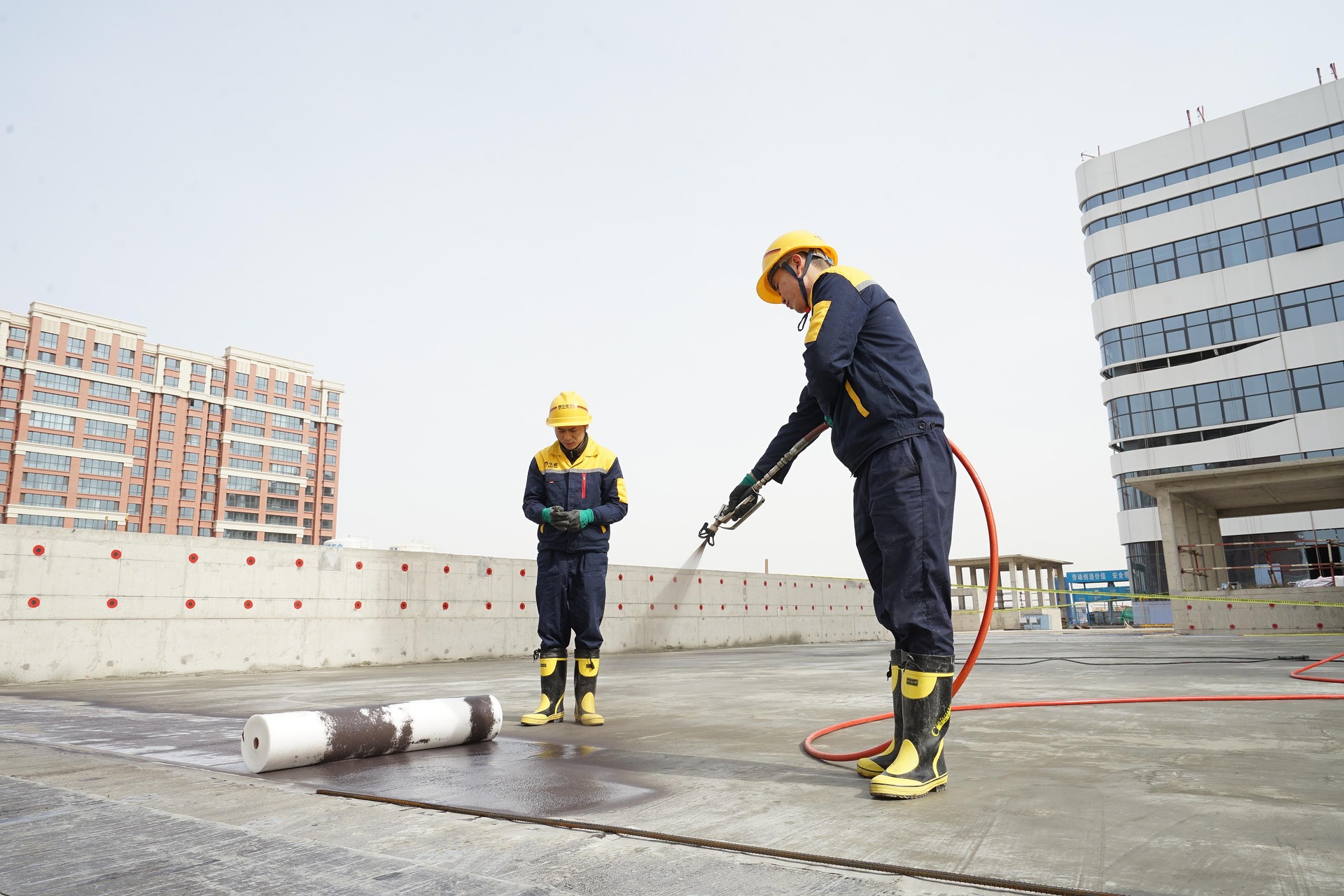
Application control is equally important. The contractor must measure wet film thickness during application and verify dry film thickness after curing. Reinforcement must be placed correctly at corners, joints, and pipe penetrations, and the overlap of bitumen sheets must meet the manufacturer’s specification. A simple checklist and photographic record help ensure every step is completed and can be reviewed later if questions arise.
Testing is the final proof of quality. Flood testing or electronic leak detection should be carried out before handover. In Dubai, a 24-48 hour pond test is common for flat concrete roofs. Metal roofs should be inspected after the first rain. If the contractor refuses to test or cannot show records, it is a warning sign that quality control may have been skipped. Proper testing is the difference between a successful project and a future failure.