Waterproofing blog
Best Waterproofing Material for Roofs in Dubai
A practical guide to PU coating, bitumen membrane, acrylic coating and cementitious details for Dubai roofs.
Waterproofing blog
A practical guide to PU coating, bitumen membrane, acrylic coating and cementitious details for Dubai roofs.
Selection guide
There is no single 'best' waterproofing material for every roof in Dubai. The optimal choice depends on your roof substrate, geometry, exposure conditions, budget, and how you intend to use the roof space. A villa owner in Jumeirah with a simple flat concrete roof and no plans for roof gardens has fundamentally different needs from a warehouse manager in Jebel Ali with a 2,000 square metre metal roof exposed to salt air and sandstorms. This guide breaks down each material by its real-world performance in UAE conditions.
The Dubai climate is uniquely demanding. Roof surface temperatures regularly exceed 70C in July and August. UV radiation is intense year-round with over 3,500 annual sunshine hours. Winter brings occasional heavy downpours that deposit 50mm of rain in hours. And every roof experiences daily thermal cycling that causes expansion and contraction. A material that works well in London or Singapore may fail completely in Dubai because it was never tested against these combined stresses. Always verify that your chosen product has a track record in Gulf conditions or carries specific high-temperature test data.
Material one
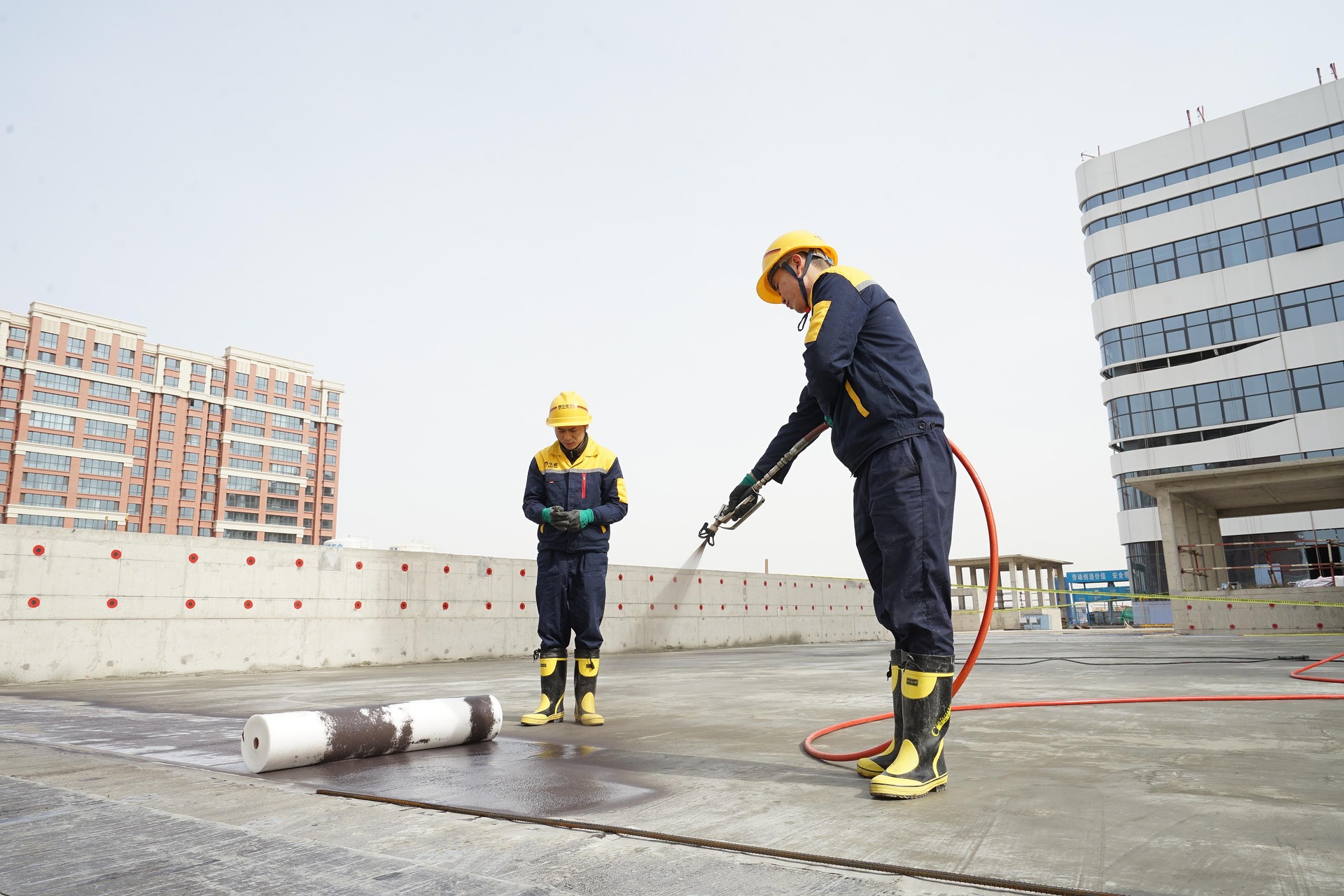
Polyurethane liquid membranes are the most versatile waterproofing solution for Dubai's varied roofscape. Applied as a liquid that cures into a seamless rubber-like membrane, PU eliminates the weak points created by seams, overlaps, and joints. This makes it ideal for villas with multiple roof levels, pergola attachments, glass rooms, and curved architectural features where sheet membranes would require numerous cuts and overlaps.
In Dubai, PU membranes typically cost AED 65-95 per square metre installed, including surface preparation and primer. The material elongates 400-600%, meaning it can stretch with thermal movement without cracking. It also forms a continuous bond around pipe penetrations, HVAC curbs, and parapet walls where most leaks originate. For high-end villas in Emirates Hills or Palm Jumeirah where aesthetics matter, PU can be tinted and finished with a textured slip-resistant surface.
The limitations are cost and application sensitivity. PU costs 30-50% more than acrylic and requires skilled technicians. Application temperature must be controlled: above 38C ambient, the coating can skin over before full cure, trapping solvents and creating bubbles. Professional contractors in Dubai schedule PU work for early morning hours and avoid peak summer months. With proper installation and annual maintenance, expect 7-10 years of service life in UAE conditions.
Material two
Torch-on bitumen membranes are the gold standard for durability in Dubai's commercial and residential sectors. Factory-manufactured as reinforced sheets with SBS polymer modification, these membranes are applied using a propane torch that melts the bitumen underside, creating a welded bond to the primed substrate. When protected by a screed, pavers, or aluminium reflective coating, bitumen systems last 10-15 years in the UAE.
Bitumen excels where other systems struggle: roofs with regular foot traffic, outdoor furniture, planter installations, and planned future construction such as shading structures or solar panels. The puncture resistance of reinforced bitumen is significantly higher than liquid coatings, making it the preferred choice for apartment podium decks and villa roofs that serve as usable outdoor space.
In Dubai, torch-on bitumen costs AED 85-120 per square metre including screed protection. The installation requires certified hot-works operators and cannot be performed on lightweight or metal substrates. The membrane is also heavier than liquid alternatives, so the roof structure must be verified to support the additional load. For warehouses and metal buildings, bitumen is unsuitable because the metal's thermal movement will tear the rigid membrane at fasteners. Best for: commercial buildings, apartment podiums, trafficked villa roofs, and any application where 15-year durability justifies the higher initial cost.
Material three
Acrylic elastomeric coatings are water-based, high-polymer paints that form a flexible, breathable waterproof layer on concrete and masonry. They are the most commonly used roof waterproofing product for Dubai villas because they are affordable, easy to apply, and available in colours that complement property aesthetics. A typical villa roof in Mirdif or Al Barsha can be coated for AED 50-80 per square metre.
The primary advantage is cost-effectiveness for straightforward roof geometries. Acrylic reflects solar heat when formulated in white or light colours, potentially reducing roof surface temperature by 15-20C and lowering indoor cooling demand. Application is simpler than PU or bitumen: brush, roller, or spray on a clean, primed surface. Most general maintenance contractors can apply acrylic correctly with minimal specialised training.
The disadvantages are significant for complex applications. Acrylic elongation is typically 200-300%, roughly half that of PU. On roofs with active expansion joints or frequent thermal cycling, acrylic will eventually crack at the stress points. It is also less resistant to ponding water than bitumen or PU. Where water sits for more than 48 hours after rain, acrylic softens and can peel at the waterline. Service life in Dubai is 5-7 years with proper maintenance. Best for: budget-conscious villa owners with simple, well-drained concrete roofs and minimal penetrations.
Material comparison
Use this comparison to narrow your choice before requesting a contractor inspection. Remember that every roof is different, and a professional assessment will identify substrate conditions, drainage issues, and structural factors that influence the final recommendation.
| Material | Best Roof Type | AED/m2 | Lifespan (UAE) | Key Advantage |
|---|---|---|---|---|
| PU Liquid Membrane | Complex flat roofs, villas | AED 65-95 | 7-10 years | Seamless, high flexibility |
| Torch-On Bitumen | Commercial, trafficked roofs | AED 85-120 | 10-15 years | Maximum durability |
| Acrylic Coating | Simple villa roofs, budget | AED 50-80 | 5-7 years | Low cost, reflective |
| Metal Roof Coating | Steel warehouse roofs | AED 45-70 | 7-10 years | Flexible for thermal movement |
| EPDM Rubber | Large commercial roofs | AED 90-140 | 15-20 years | Longest life, high UV resistance |
*Prices indicative for Dubai in 2026. Obtain site-specific quotations for accurate pricing.
Expert recommendation
At DryGuard.ae, we do not sell materials. We design waterproofing solutions. Our process begins with a roof inspection that documents substrate type, existing damage, drainage patterns, and structural conditions. We then recommend the material that delivers the best performance for your specific roof, not the material that generates the highest margin.
For a typical villa in Arabian Ranches with a flat concrete roof, good drainage, and no plans for roof gardens, we often recommend a two-coat polyurethane system. The seamless coverage eliminates joint weaknesses, and the 7-10 year lifespan with maintenance represents excellent value. For a warehouse in Al Quoz with a metal roof showing fastener corrosion, we recommend fastener replacement followed by a high-build acrylic coating system. For a commercial podium roof in Downtown Dubai that supports pedestrian traffic and planter boxes, we specify a torch-on bitumen membrane with protective screed and paver finish.
The key is matching material to reality, not to a catalogue description. Contact us for an inspection and a written recommendation with material datasheets, method statements, and warranty terms. Every recommendation is specific to your property, your budget, and your performance expectations.
Related services
Choosing the right waterproofing material is only half the battle. Proper application by trained technicians using the correct preparation, priming, and curing procedures is equally important. Our teams are trained in PU, bitumen, acrylic, and metal roof coating systems, and we provide written warranties for every project.
EPDM and metal roofs
For large commercial and industrial roofs in Dubai, EPDM rubber membranes and TPO single-ply membranes offer excellent durability. EPDM is a synthetic rubber membrane that is UV-stable, flexible, and resistant to temperature extremes. In the UAE, EPDM systems can last 15-20 years when installed correctly. They are usually mechanically fastened or fully adhered, depending on the roof structure and wind uplift requirements. TPO membranes are heat-welded at seams and offer high reflectivity, which reduces cooling costs. TPO is popular for industrial buildings and LEED projects where energy performance is a priority.
Metal roof coatings are a different category. Warehouse and factory roofs in Jebel Ali, Al Quoz and Dubai Investment Park are usually built from steel sheets. These sheets expand and contract every day, and the fasteners are the weak point. The best solution is to replace damaged fasteners, treat rust, and apply a flexible coating that follows the metal movement. High-build acrylic or polyurethane coatings designed for metal can last 7-10 years and also reduce internal temperature. This is usually 60-70% cheaper than replacing the roof sheets.
The choice between EPDM, TPO, and metal coatings depends on the roof type, the client's budget, and the required service life. For a new warehouse roof, a single-ply TPO or EPDM membrane may be the best long-term investment. For an existing leaking metal roof, a coating system is more practical. A professional contractor should assess the substrate and structural condition before recommending a system.
Maintenance
Every waterproofing material lasts longer with proper maintenance. In Dubai, the main maintenance tasks are cleaning gutters and drains, inspecting flashings after sandstorms, and checking for cracks or blisters after the summer. A single blocked drain can create a pond that degrades the best membrane. We recommend a professional roof inspection at least once a year, and after any major storm.
For acrylic and PU coatings, a fresh top coat every 3-5 years restores the UV protection and reflectivity. For bitumen membranes, inspect the protective screed or pavers for cracks and repair them before water reaches the membrane. For metal roofs, check fasteners annually and reseal any that have loosened. These small maintenance actions prevent the large cost of a full re-waterproofing project.
Maintenance also includes avoiding damage from tradespeople. AC technicians, solar panel installers, and painters often walk on the roof without protecting the waterproofing layer. Punctures, scratches, and spilled solvents can all create leak paths. If your roof is used as a terrace, use paver supports or decking that allows water to drain beneath. Do not place heavy planters directly on the membrane.
Final advice
The best waterproofing material for your Dubai roof is the one that matches your roof's substrate, geometry, exposure, and budget. A flat villa roof with good drainage and no foot traffic can be protected with acrylic or PU. A complex roof with pergolas, planters, and multiple penetrations needs PU. A trafficked podium or villa roof that will support outdoor furniture and foot traffic needs torch-on bitumen. A large commercial roof may benefit from EPDM or TPO. A leaking metal warehouse roof needs a specialist metal coating system.
Do not select a material based on price alone. The cheapest option is usually the most expensive when it fails early and causes internal damage. Ask your contractor for material datasheets, a method statement, and references from similar projects. Verify that the product is suitable for UAE temperatures and UV exposure. Ask about the warranty and what maintenance is required to keep it valid.
At DryGuard.ae, we start with a roof inspection and then recommend the material and system that gives the best long-term value. We apply PU, bitumen, acrylic, EPDM, TPO, and metal roof coatings across Dubai and the UAE. Contact us for an inspection and a written recommendation.
Climate factors
The UAE climate is the single biggest factor that determines whether a waterproofing material will succeed or fail. Roof surface temperatures in Dubai can exceed 70C during summer, and UV radiation is among the highest in the world. Materials that are not UV-stable will degrade, chalk, and crack within a few years. This is why roof coatings in Dubai must include UV-resistant pigments and topcoats, and why bitumen membranes must be protected with reflective aluminium or screed.
Thermal cycling is another major challenge. A roof surface can swing from 70C during the day to 20C at night in winter, causing constant expansion and contraction. The waterproofing material must be flexible enough to move with the substrate without cracking. Polyurethane and EPDM excel in this regard, while rigid systems and poorly applied cementitious coatings can crack at joints and corners.
Sand and dust storms also affect performance. Wind-blown sand can abrade coating surfaces, especially on warehouse roofs. Salt air in coastal areas such as Jumeirah, Palm Jumeirah, and Fujairah can corrode metal fasteners and degrade certain membranes. When choosing a material, ask the manufacturer for UAE-specific test data and select systems that have performed well in similar Gulf climates for at least 5-10 years.
Installation quality
A premium material installed poorly will fail faster than a standard material installed correctly. The most common cause of waterproofing failure in Dubai is not the product; it is inadequate surface preparation, insufficient thickness, missed details, or rushing the cure. Even the best bitumen membrane will leak if laps are not welded correctly or if edges are not terminated properly.
Preparation is the foundation of a long-lasting roof. The substrate must be clean, sound, dry, and properly primed. Cracks, voids, and rust must be repaired before the membrane or coating is applied. Each coat must be applied at the specified wet film thickness, and a second coat should follow only after the first has cured. Corners, penetrations, and drains require reinforcement and extra attention.
Choose a contractor who can demonstrate proper installation procedures, has manufacturer training for the specific material, and follows a written method statement. Ask for photographs of previous projects and a sample of the application process if possible. The combination of the right material and expert installation is what delivers a 10-15 year waterproofing solution in the UAE.
Sustainability
A waterproof roof can also be an energy-saving roof. Cool roof coatings are designed to reflect sunlight and reduce the amount of heat absorbed by the building. In Dubai, this can lower the roof surface temperature by 20-30C and reduce the load on air conditioning. The result is lower electricity bills and a more comfortable interior during the hottest months.
The most common cool roof coatings are white or light-coloured acrylic and elastomeric products. They have high Solar Reflectance Index values and are suitable for concrete roofs with good drainage. Some PU and bitumen systems also have reflective top coats that improve energy performance. However, the reflectivity must be maintained because desert dust and dirt can reduce performance over time and require periodic cleaning.
Sustainability also means longevity. A waterproofing system that lasts 15 years is more sustainable than one that needs replacement every 5 years because it uses fewer materials and less energy over the life of the building. When choosing a material, consider the total environmental cost and the expected service life, not just the initial price. A longer-lasting system is usually the greener choice.